

Why can two international moving quotes differ so much? They may describe two different moves. International moving cost is not a universal rate: it reflects the route, the shipment and the services planned. Looking beyond the headline figure helps you understand what the estimate covers and whether it matches the move you have in mind.
A fair comparison starts with the details behind each figure. Shipment size, destination, timing and requested services can all shape a quote. So can tailored packing for delicate belongings or storage between departure and arrival. This guide explains how to compare estimates on a like-for-like basis, spot differences in scope and prepare useful information for a moving plan suited to your needs.
When you know what you’re taking, where it’s going and what support you need, it’s easier to understand the choices behind an estimate and plan your budget with greater confidence.
Key Takeaways
- Your international moving cost depends on the shipment, route and support needed, so a headline estimate needs context.
- A detailed inventory helps define the shipment and supports a more tailored estimate.
- Compare quotes using the same belongings, destination, packing needs, storage requirements and service dates.
- Separate everyday belongings from items that may need specialist packing or storage to clarify your priorities.
- Gather your destination details, shipment information and service needs to prepare for a clearer moving plan.
What Does International Moving Cost Actually Cover?
Definition: International moving cost is the project-specific quote for moving a defined shipment along a particular route, with the services planned for that move. It reflects what is being moved, where it is going and how the relocation is organized.
A quote is more than a headline figure. Review the work and support described in the estimate. Transport and logistics coordination form the moving plan, while packing and storage should be clearly described so you can see how they fit into the scope. Two figures are comparable only when you understand what each covers.
International moving estimates vary because each household has a different shipment, route and service plan.
What information does an international moving estimate represent?
An estimate is based on the available details about your belongings and destination. An inventory gives the moving team a clearer picture of the shipment, from everyday household contents to large or delicate pieces. Your destination helps define the route and logistics involved. These details make the plan more specific than a general online average, which can’t account for an individual move.
For a useful inventory, list the main items and flag anything that needs special attention. A broad description such as “one household” leaves more room for assumptions than a considered list of furniture, boxes and fragile or valuable belongings. If you’re still deciding whether to move certain items, mark them separately.
Why two overseas moves can have different quotes
Even when households are moving to the same destination, their shipment volume, requested packing, timing and service needs may differ. One move might involve a compact selection of belongings and a straightforward schedule. Another might include more items, tailored packing or a gap between departure and arrival that calls for storage.
Delicate belongings can also change the planned scope. A piano or fine art may need export-grade packing or bespoke crating rather than the same preparation as ordinary household items. Identify these pieces early so their handling is reflected in the plan and quote.
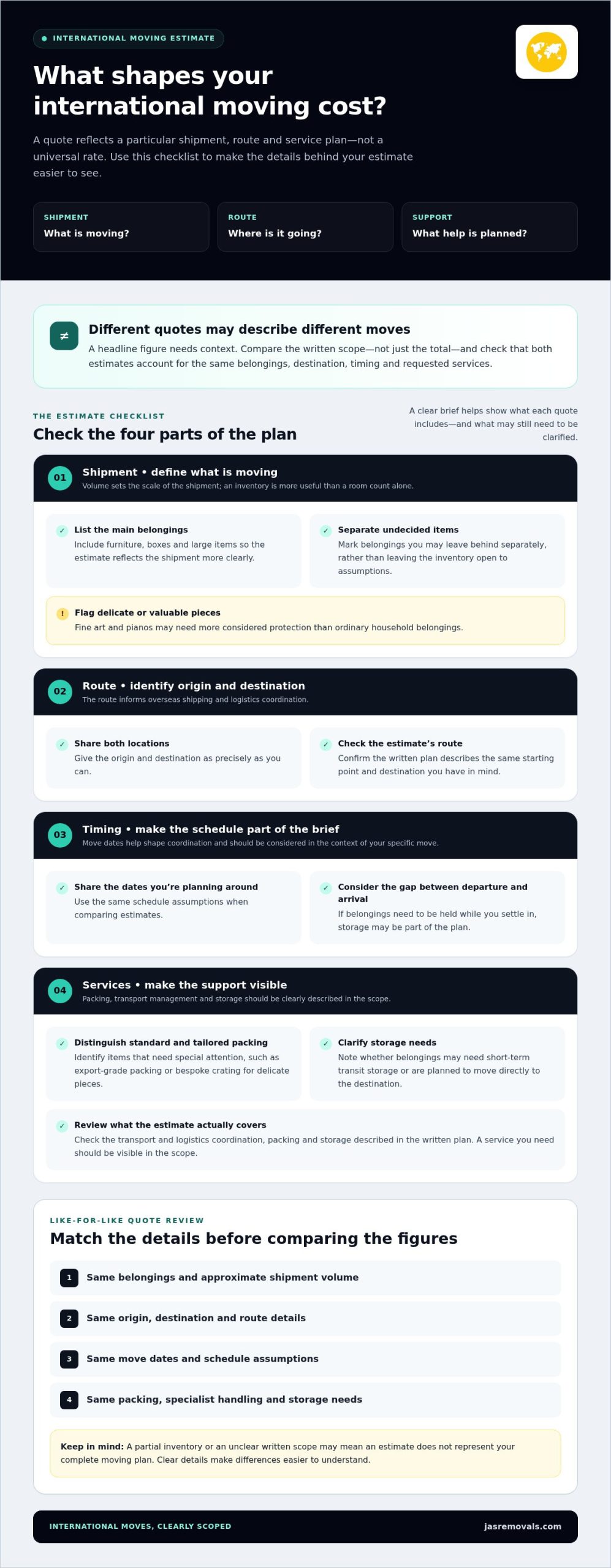
As you review an estimate, separate the plan into its practical parts:
- Shipment: Which belongings and approximate volume does the estimate account for?
- Route: Which origin and destination does it describe?
- Services: What packing, transport management and storage are included in the plan?
- Timing: Which move dates or schedule assumptions does the plan use?
This breakdown helps explain why quotes differ without assuming that the lowest headline figure covers the same work as another. If an estimate is based on a partial inventory, or the written scope does not describe a service you need, the total may not represent your complete moving plan. Clear details make the estimate easier to understand and give you a stronger basis for comparing like with like.
Which Factors Shape Your International Moving Cost?
A tailored estimate takes shape from several connected details, not one broad label such as “three-bedroom home” or “overseas move.” Shipment volume sets the scale, while the origin, destination, route, timing and requested services help define the plan around it.
Shipment volume, route, timing, packing needs and storage requirements are the main variables that shape an international moving estimate. Understanding each one helps you give a clearer brief and see why your plan may differ from another household’s, even if the destinations are similar.
How shipment size, route, and timing affect the estimate
A room count can be a useful starting point, but it isn’t a substitute for an inventory. Two homes with the same number of rooms may contain very different amounts of furniture, boxes and large items. List what you plan to move, and note any belongings you’re still deciding about. This gives the moving team a more grounded view of the shipment than a room-count assumption alone.
Origin and destination matter because the route informs overseas shipping and logistics coordination. Share the locations as precisely as you can, then include the timing you’re working toward. Dates are part of the planning brief because they help shape coordination, but the schedule needs to be considered in the context of your specific move. For destination background, the U.S. Department of State Country Information pages offer country-specific information that can help you understand the wider context of a relocation.
How packing, specialist handling, and storage change the scope
Some belongings need standard household packing, while others call for more considered protection. Fine art and pianos, for example, may require export-grade packing or bespoke crating. Identify these pieces early to distinguish their handling needs from the rest of the shipment and make the service scope clear.
Storage can also shape the move plan. If your belongings need to be held between departure and settling in, short-term transit storage may be part of the arrangement. Other households may move directly to their destination. Consider which items need tailored protection, which are essential on arrival and whether any belongings may need secure storage.
- Inventory: Note the main furniture, boxes, large items and delicate belongings.
- Route and timing: Identify the origin, destination and dates you’re planning around.
- Support: Mark any packing, specialist handling or storage needs.
These details give JAS Removals & Storage a practical foundation for coordinating international logistics, tailored packing and transport management around your shipment. Explore JAS international moving services as you consider the support that fits your move.
How to Compare International Moving Quotes Fairly
A useful comparison starts with a shared brief, not a quick scan of totals. If one estimate reflects a fuller inventory, specialist packing or storage and another does not, the figures describe different plans. Comparing the same belongings, route, service dates and expectations helps you understand what each estimate covers before weighing the options.
Build a like-for-like quote comparison
Set each estimate beside the same inventory and check the origin, destination and dates it assumes. Then compare what’s stated about packing, loading, transport coordination and delivery. Record storage and specialist handling separately so you can see how each service fits into the plan. International moving cost is easier to assess when the scope is visible.
Use this table to note whether each estimate includes, excludes or leaves a service unclear. It compares scope, not prices.
| Area | What to compare across estimates |
|---|---|
| Inventory | Do they describe the same belongings and shipment assumptions? |
| Packing | Is household packing included, or are packing and specialist crating scoped separately? |
| Storage | Does the plan include storage, and for what part of the move? |
| Route | Do origin, destination and service dates match? |
| Stated exclusions | What work or items are excluded, optional or not described? |
Read assumptions, exclusions, and scope changes
Look for assumptions that could change if your inventory or plans change. An estimate based on a preliminary list may need to be revisited if you add large items, request more packing or need storage. Written scope and clear item details make differences easier to spot. Terms and pricing structures can vary, so compare what each estimate says rather than assuming the same labels mean the same thing.
For a closer review, check each estimate against these questions:
- Belongings: Are the items, approximate volume and any delicate pieces represented consistently?
- Handling: Which packing, loading, transport coordination and delivery tasks are described?
- Additional needs: Are storage and specialist packing included, separate or excluded?
- Changes: Which assumptions might no longer apply if your shipment or dates change?
The lowest headline figure may cover a narrower service, while another estimate may describe more of the work you need. Compare the scope first, then consider how each plan fits your priorities. Keep a copy of the inventory and note changes as your plans develop. A clear shared reference keeps the comparison grounded in the same move.
How to Prepare for a More Predictable International Moving Estimate
A clear brief gives your moving team a more useful starting point. It won’t guarantee a final figure, but it can help shape an international moving estimate around your actual belongings, destination and support needs instead of assumptions. Work through these steps, then keep the information together as plans take shape.
Create a useful inventory and moving brief
- Inventory your belongings. Group items by room and note larger pieces, boxes and anything fragile, valuable or oversized. Separate belongings you expect to move from those you’re still deciding about. Flag pianos, fine art or other items that may need specialist packing so their handling needs are visible from the outset.
- Identify your destination. Record the intended origin and destination, including relevant addresses or locations when available. These details help frame the route and logistics planning. A general destination label may leave important context out of the brief.
- Define your service needs. Note whether you expect to pack belongings yourself or need packing support. Identify items that may need tailored protection, and consider whether secure storage could help if your departure and arrival plans don’t align. Distinguishing everyday belongings from those needing specialist care or storage clarifies your priorities.
- Review the estimate. Compare its written scope with your inventory, route and requested services. Look for differences between the plan described and the support you need, and keep any questions or decisions alongside the estimate for a clear record.
Review the estimate as plans develop
Moving plans can change. If you add belongings, remove large items, revise your preferred moving window or decide you need storage, update the brief so the estimate reflects the current plan. A material change may affect the shipment or coordination required. Clear, current information helps the team understand what has changed without treating an earlier estimate as a fixed figure.
Keep your inventory, destination details, service requests and estimate together. A simple dated note of decisions can help distinguish current instructions from older plans, particularly if several household members are helping prepare. For a broader planning sequence, use this guide to plan an international move step by step.
Once your brief is ready, discuss your international move with JAS Removals & Storage. JAS coordinates overseas shipping and logistics around your shipment requirements, with tailored packing and secure storage to support different moving plans.
Plan Your International Move with JAS Removals & Storage
A clear moving plan begins with a clear picture of the journey. Before discussing your move, gather the origin and destination, a working inventory, your preferred timing and the support you expect to need. Include details that could shape the shipment, such as delicate or oversized belongings, packing preferences or a possible gap between leaving one home and settling into another.
This information helps JAS Removals & Storage coordinate international relocation support around your shipment and service requirements. It also gives the conversation a useful starting point: what is travelling, where it is going and what care or coordination matters along the way.
What JAS can coordinate for an overseas move
JAS provides international relocation assistance that includes overseas shipping and logistics coordination. The plan can be shaped around your shipment, with tailored packing and transport management suited to the move. For fine art, pianos or other delicate, high-value items, export-grade packing and bespoke crating help protect them during international transport.
Storage can also support a move when belongings need to be held during transit or for a longer-term need. It isn’t required for every household, so note whether your move is expected to proceed directly or may involve a period between departure and arrival. This helps align the requested support with your circumstances.
What to prepare before discussing your move
Bring together the details that give the moving plan shape. You don’t need every decision finalized; a thoughtful working brief can identify what is known and where plans may still change. Include:
- Route: Your origin and destination, with relevant location details.
- Shipment: An inventory grouped by room, including large, fragile or valuable items.
- Timing: Your preferred moving window and any dates that influence the plan.
- Services: Packing preferences, specialist handling needs and transport coordination priorities.
- Storage: Whether a gap in your schedule may mean belongings need to be held.
Separate everyday household belongings from pieces that may need specialist attention. For example, identify fine art or a piano for export packing, and note which items you’ll want readily available at your destination. This level of detail helps JAS understand the intended scope and tailor the plan. If your inventory or timing changes, update the brief so the estimate reflects your current plans.
International moves involve many connected decisions, but you don’t have to organize every detail alone. Discuss your international move with JAS Removals & Storage and share the route, shipment and support you have in mind. A practical conversation can help bring the next steps into focus.
Take the Next Step with a Clear Moving Plan
Your estimate can be more than a number to approve or decline. Use it to understand the choices available and decide which parts of the move matter most to you, whether that means keeping particular belongings together, prioritizing certain items or allowing flexibility in your plans. This makes international moving cost easier to assess against the move you actually want.
You don’t need every detail settled before taking the next step. A working list of priorities gives the conversation direction, and JAS Removals & Storage can shape international relocation support around your plans.
Discuss your international move with JAS Removals & Storage and turn your priorities into a practical plan. With a clear next step, the move can feel more manageable.
Frequently Asked Questions
How much does an international move cost?
There’s no single reliable figure for every international move. The estimate depends on the origin and destination, the belongings being shipped, the services requested and the timing. To assess your international moving cost, prepare a current inventory and compare written estimates that describe the same shipment and scope. Include bulky or delicate items, and note whether your plans are firm or still developing. A tailored discussion can then take those specifics into account.
What is usually included in an international moving quote?
Inclusions depend on the service scope, so read the estimate rather than assuming there’s one standard package. Look at how it describes the inventory, packing, handling and transport coordination. Check whether services such as storage or specialist packing for a piano or artwork are included, separately scoped or excluded. If a phrase is unclear, record it for discussion and compare it with the written scope in any other estimate.
Why do international moving quotes vary so much?
Quotes vary because shipments, routes and service requirements differ. A household moving a few boxes and pieces of furniture needs a different plan from one shipping bulky items or requiring specialist handling. Timing and the need to hold belongings between homes can also change what the move involves. For a fair comparison, check that estimates describe the same items and requested services. Different headline figures may reflect different plans, not just different pricing.
Can I reduce my international moving cost by shipping fewer belongings?
Shipping fewer belongings may change the shipment scope, but the effect depends on the route and services involved. Start by reviewing your inventory and marking what you’ll need at your destination, what you could leave behind and what needs careful handling. Removing an item won’t necessarily affect every part of a moving plan. Use the revised inventory when discussing or comparing estimates so the scope reflects what you actually intend to move.
When should I request an international moving estimate?
Begin the planning conversation once you have a likely destination, an approximate moving window and a working household inventory. These details can develop over time, so share what’s settled and identify what may change. Preparing early gives you room to organize item information and consider packing or storage needs, without relying on a promised lead time. The appropriate schedule depends on the route and the particular move.
Do international moving quotes include customs duties and taxes?
Moving services and destination-related charges, such as duties or taxes, are separate considerations. Read the estimate to see how it describes these charges and whether they sit within or outside the stated service scope. Rules and charges depend on the destination and circumstances, so this isn’t a substitute for legal or tax advice. For current requirements, consult official information from the destination country’s relevant authorities.
Can storage affect an international moving estimate?
Storage may be useful if your departure and arrival dates don’t line up, or if belongings need temporary holding while plans take shape. Its effect on an estimate depends on the arrangement and the overall move scope. JAS Removals & Storage offers secure storage for short-term transit holding and longer-term needs. If you think you may need it, include the timing and items involved in your moving brief.