

A move is easier to manage when the plan fits the distance, the belongings, and the work involved. JAS Removals & Storage can support local and long-distance relocations, but a clear plan matters just as much as careful lifting. Knowing what to arrange ahead of time helps keep the process orderly.
Moving brings several demands at once: packing, coordinating people and schedules, and ensuring belongings are loaded and unloaded carefully. The details change for long-distance or business moves, but the priorities stay the same: protect what matters and keep each stage clear.
This article covers practical considerations for household moves, from packing and paperwork to loading, unloading and commercial relocations. Learn how local and long-distance moves differ, what can affect the work involved, and how JAS Removals & Storage can help with domestic, international and office moves.
Key Takeaways
- Plan local and long-distance moves around the route, schedule, and belongings that need to be transported.
- Choose a packing approach that suits the items, with extra care for delicate or valuable possessions.
- Understand what company licensing and insurance mean for your move before arrangements are finalized.
- For an office relocation, account for equipment, work continuity, and the order in which items need to arrive.
- Prepare for loading and unloading by organizing access, priorities, and where belongings should go at the destination.
Local and long-distance moves
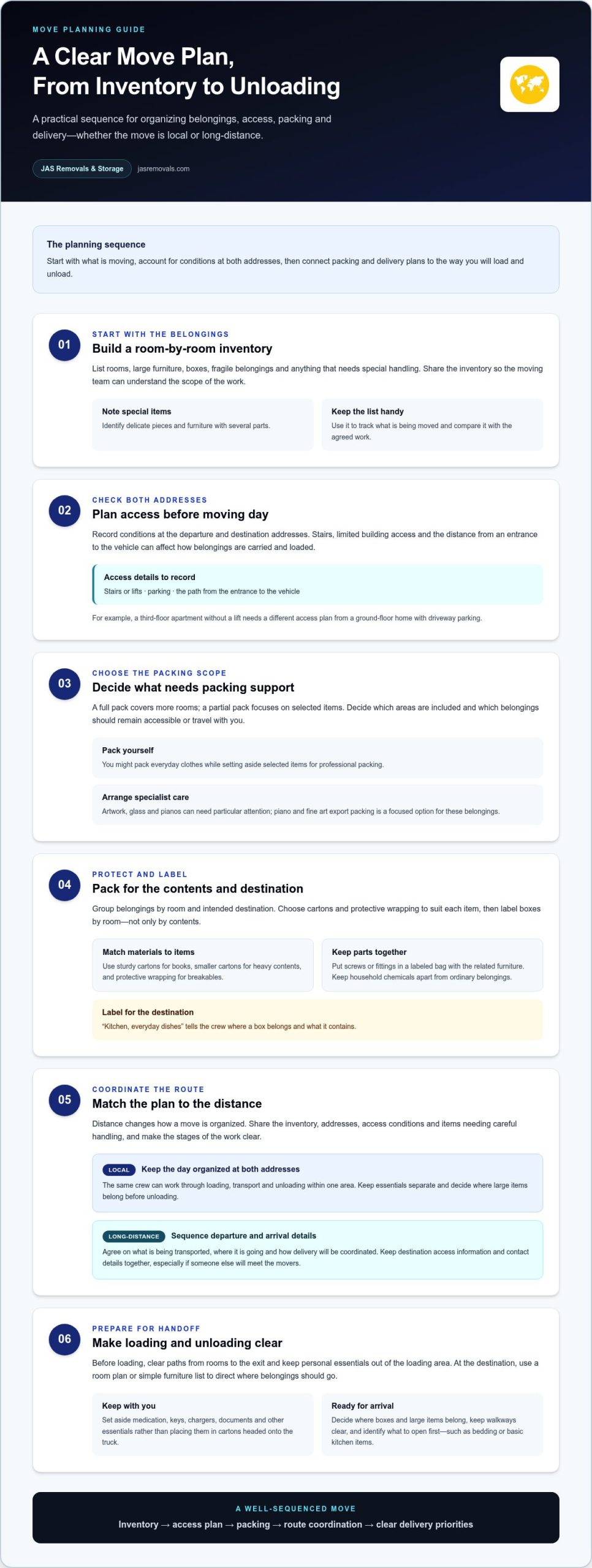
Distance changes how a move is organised. A local household move may leave daily routines within reach, while a long-distance relocation requires more coordination between departure and arrival. In either case, begin with an inventory of rooms, large furniture, fragile items and anything needing special handling. This gives the moving team a clear picture of the work.
When planning a local move, details at each address matter as much as the distance. Narrow stairs, limited building access or a long walk from the entrance to the vehicle can affect how belongings are carried and loaded. Note these conditions at both addresses. A third-floor apartment without a lift, for example, needs a different access plan from a ground-floor home with driveway parking.
Local moving usually means the same crew can work through loading, transport, and unloading within one area. Keep essential items separate, such as medication, keys, chargers, and documents. Mark boxes by destination room, not only by contents. “Kitchen, everyday dishes” is more useful at the new home than “miscellaneous.” This labeling step helps direct boxes as they come off the truck.
Long-distance moves benefit from careful sequencing. Agree on what is being transported, where it is going, and how delivery will be coordinated. Keep contact details and destination access information together, especially if someone else will meet the movers. If Brave Movers is part of your move planning, share these details early so the route and delivery arrangements are clear.
- List furniture, boxes, and delicate belongings before planning the move.
- Record access details for both addresses, including stairs and parking.
- Label boxes by destination room and identify priority items clearly.
- For a longer route, organize arrival details and essential belongings separately.
When comparing a moving company, focus on the scope of the move rather than distance alone. Share the inventory, both addresses, access conditions, and any items needing careful handling. Ask for the proposed work to be described clearly, including loading, transport, and unloading. If Brave Movers is transporting your household, a written outline of these stages can help you understand the plan.
For a local household move, preparation can reduce confusion on moving day. Clear a path from each room to the exit, and keep personal essentials out of the loading area. At the destination, decide where large items belong before unloading starts. A room plan or simple furniture list gives the crew direction and helps you settle in methodically.
Decide where boxes should go before unloading begins, and keep walkways clear so the crew can place them in the right rooms. Set aside belongings that should stay with you rather than go on the truck, and keep the inventory nearby as items are carried out. Use the inventory to compare what is being moved with the agreed work and access conditions at each address.
Packing services
Packing involves more than putting belongings in boxes. Group items, protect vulnerable surfaces and label cartons so they are easy to identify at the destination. Decide which rooms or belongings need professional attention. You might pack everyday clothes yourself while arranging specialist packing for artwork, glass or a piano.
Choose packing materials to suit the item. Use sturdy cartons for books, smaller cartons for heavy contents and protective wrapping for breakables. Keep similar items together and fill empty spaces to limit movement. Wrap a framed picture separately and mark the carton as fragile. Keep cleaning products and other household chemicals apart from ordinary belongings.
Sort belongings before packing. Set aside items to keep, donate, discard or carry personally. Then make a room-by-room list, noting delicate pieces and items with several parts. Put screws or fittings in a labeled bag with the relevant furniture. Keep essential documents, keys, medication and chargers out of cartons headed onto the moving truck.
Plan packing around your household’s priorities. A full pack covers more rooms, while a partial pack focuses on selected items, such as kitchenware or fragile belongings. Agree which areas are included and identify anything that should remain accessible. At the new home, room labels help direct cartons and make unpacking more orderly.
- Group belongings by room and intended destination.
- Choose cartons and protective wrapping to suit the contents.
- Label fragile items clearly and keep essential belongings separate.
- Identify furniture parts and keep fittings with their related items.
Artwork and pianos call for particular care because their shapes, finishes, and handling needs differ from ordinary cartons. A framed painting, for example, needs protection for its surface and edges, while a piano requires a plan suited to its form and weight. For these specialist belongings, piano and fine art export packing is a focused option. It can be especially relevant when valuable or delicate pieces are part of an international move.
Before moving day, walk through each room and check that cartons are closed, labeled and grouped for collection. Make a short list of what to open first, such as bedding, basic kitchen items and children’s essentials. This links the packing plan to arrival, so unpacking can begin with the belongings your household needs most.
Company licensing and insurance
Licensing and insurance documents answer different questions. Licensing identifies a company’s authority to perform particular work, while insurance documents describe coverage and its limits. Read the names and services on each document, then compare them with the company named in your moving agreement. If the names differ, clarify each party’s role before the move proceeds.
For U.S. household moves, estimates involving brokers have a specific tariff rule. Since January 28, 2011, brokers have been required to base estimates on the published tariffs of the authorized carrier transporting the household goods, according to the U.S. Government Publishing Office. This distinction matters because a broker arranges transportation, while the carrier performs it. Know which company is named for each role.
Read insurance paperwork closely. Identify which belongings are covered, what limits apply, and how exclusions or claims are described. The written terms determine how damage or loss is addressed, even if an item such as a television appears on your inventory. Keep the estimate, agreement, inventory and insurance documents together so you can refer to them easily.
A company’s star rating can summarise customer feedback, but it does not establish licensing or insurance. Read reviews for specific examples, such as communication about delivery or care with fragile furniture. Look for recurring themes rather than relying on one score. A high rating and complete paperwork answer different questions, so assess them separately.
Company history offers context, but it does not prove current coverage. A long operating record cannot replace current documents or the terms of your move. Compare the company name and service details across the estimate and agreement. For an interstate move, for example, understand which named carrier will transport your belongings.
- Match the company names across the estimate, agreement, and relevant documents.
- Separate licensing evidence from insurance terms and customer ratings.
- Read the written coverage limits, exclusions, and claims instructions.
- Use reviews and company history as context, not substitutes for paperwork.
Organise these records before moving day. A folder labeled “move documents” can hold the estimate, inventory, agreement and coverage information. If a question arises about a damaged item, these records provide a clear starting point. They also help distinguish the company’s role, the carrier’s role and the applicable terms.
Commercial relocations
A commercial relocation involves more than desks. It may include workstations, files, meeting-room equipment and systems staff rely on every day. Start with an inventory organised by department and destination area. Label each workstation by team and floor, for example, so equipment reaches the right place.
Set the move sequence around business priorities. Identify which teams need to resume work first, then group their essential furniture and equipment accordingly. A customer support team, for instance, may need desks, computers and communications equipment ready before storage cabinets. This connects the relocation plan to daily operations.
Create a written move plan that assigns responsibilities and records key decisions. Include building contacts, access arrangements, loading areas and a designated decision-maker for each site. Note restricted corridors or shared entrances. If a reception desk blocks a hallway, plan to move it before other large items pass through.
Plan technology moves separately. List computers, monitors, printers, network equipment and cables by workstation or room. Keep each group together and mark its destination clearly. Before equipment is disconnected, identify who will handle decommissioning and recommissioning at the new site. Treat each workstation as a set, not as unrelated boxes.
- Inventory furniture, files, and equipment by department.
- Mark each item with its new room or workstation.
- Set the loading order around operational priorities.
- Assign named contacts for both locations.
- Plan technology disconnection and setup as separate tasks.
Staff communication also shapes a move. Give employees a concise packing and labeling procedure, and explain where personal items should go. Use a shared checklist to record who has cleared each desk and whether equipment is ready for transport. A department lead can flag a workstation that still contains confidential files before the moving team begins.
At the destination, use a floor plan to guide placement. Mark team areas, meeting rooms and shared equipment locations before unloading starts. Then check each department against its inventory. This review can reveal a missing monitor or a cabinet delivered to the wrong room while the move is still being organised.
Keep the plan flexible enough to handle access changes without losing sight of priorities. If a lift becomes unavailable, the site contact can identify another route and update the sequence for large items. Clear communication helps prevent conflicting decisions. With responsibilities, equipment groups and room assignments recorded, the relocation can proceed in an organised way.
Loading and unloading
An organised loading process starts before the first item reaches the truck. Clear the route from each room to the exit, and move loose rugs, shoes and small obstacles aside. Keep children and pets away from active carrying areas. Identify tight turns or steps at the doorway so bulky furniture can be moved along a clear route.
Group belongings according to how they should be handled. Keep fragile cartons upright and clearly marked, and pack heavy boxes so they can be lifted securely. A box of books, for example, should be manageable to carry rather than filled until it is difficult to control. Set aside items that must stay accessible, such as keys, medication and important documents.
Before loading, review the inventory and point out belongings that need special attention. A glass table, framed artwork or dismantled bed may need a different position or handling sequence from ordinary cartons. Keep furniture fittings together and label the item they belong to. This makes it easier to reassemble parts during unloading.
- Clear the carrying route from rooms to the exit.
- Mark fragile cartons and keep them upright.
- Set aside personal essentials that should not go onto the truck.
- Identify furniture parts and match fittings to their items.
- Keep the inventory available for the destination check.
Loading order affects what can be reached first at the new address. Identify items needed straight away, such as a bed frame or basic kitchen supplies, and plan how to access them. Discuss priority pieces before loading rather than searching for them among sealed cartons later. A short priority list gives everyone a shared reference.
At the destination, direct each item to its intended room as it comes inside. Use room labels on cartons and a simple floor plan for large furniture. Mark where a dining table should go before unloading, for example, so it does not block a hallway or another delivery route. Keep pathways clear while boxes are placed.
After unloading, compare belongings with the inventory and inspect visible surfaces as items are positioned. Note any missing carton or mark on a tabletop while its location is clear. Keep packaging and loose fittings contained instead of spreading them across rooms. A final walk-through of the truck and home helps catch anything left behind and confirm essential furniture is in place.
Before moving day, prepare a short loading and unloading plan with access details, priority belongings and room assignments. It gives the crew clear direction at both addresses and helps your household focus on settling in.
JAS Removals & Storage: International Moves
JAS Removals & Storage can coordinate an international move when your household is relocating across borders. For a move within the country, its Domestic Moves service supports your relocation. Businesses planning a workplace move can use Office Moves, while Secure Storage provides a place for belongings between departure and settling in.
The next step depends on the type of move, what needs transporting and how the timing fits your plans. Share the route and the kind of relocation you’re arranging to begin a practical conversation with JAS Removals.
Contact JAS Removals & Storage to discuss your move.
Make your next move a considered one
A move is a major transition, but the next step can be practical: define what needs to happen, who needs to be involved and what matters most at your destination. If you’re considering Brave Movers, think about the support you want throughout the process, from early planning to decisions on moving day. Contact JAS Removals to discuss your priorities and plan your move.
JAS Removals & Storage supports international and domestic moves, as well as office relocations. Share the type of move you’re planning and the priorities that matter to you, then consider the next step at your own pace. Contact JAS Removals & Storage to discuss your move. With a considered plan and the right support, you can approach the transition with greater clarity.