

There is no universal mileage cutoff for a long-distance move. The definition can vary by moving service and route. When searching for Movers On The Go, look beyond the distance: consider packing needs, delivery planning and how the move may affect your home or workplace.
A move over a long route can feel complex, and relocating a workplace brings its own practical demands. Understanding what long-distance moving involves is a useful first step. Knowing which services you need can make the next decisions clearer.
This article explains how long-distance moves are defined, what packing and office relocation can involve, and how customer reviews may help you assess a moving service. It also covers commercial moves, where careful coordination helps a business plan the relocation of its workspace and equipment.
Key Takeaways
- Long-distance moving has no single mileage cutoff, so route, delivery planning and the service involved all matter.
- Starting early and organizing belongings by room can make packing and unpacking more manageable.
- Office relocations need coordinated handling of furniture, equipment and IT so the move supports business continuity.
- Customer ratings are most useful when read alongside detailed comments about communication, care and how issues were handled.
- Apartment access, building rules and household size can shape the planning needed for a home move.
Packing and unpacking services
Packing services can cover selected belongings or an entire home. Before choosing, make a room-by-room inventory and identify items that need special care. In the kitchen, separate glassware, cookware and pantry goods. In a study, list books, computers and confidential papers. This helps define the packing scope and clarify what you’ll pack yourself. Plan unpacking by priority too, marking bedding, toiletries and kitchen essentials for early access.
Agree on the packing scope before moving day. List the rooms to be packed, any excluded items and how cartons should be labelled. “Bedroom, wardrobe” is more useful at the destination than “miscellaneous.” Keep passports, medication, keys and essential documents together for you to carry. Note detachable furniture parts, and keep their fittings with the relevant item. A clear inventory gives everyone a shared reference during loading and delivery.
A practical preparation sequence keeps decisions manageable:
- Sort belongings by room and set aside items that won’t move.
- Mark fragile pieces, such as framed photographs or glass lamps.
- Write the destination room and contents on each carton.
- Keep personal essentials separate from packed household goods.
- Record furniture condition and identify pieces needing careful handling.
A clear inventory distinguishes everyday cartons from delicate or bulky belongings. Piano and fine art export packing needs to account for the item, its surfaces and its transit requirements. Identify a framed painting separately from ordinary wall décor, for example. A suitable packing plan begins with an accurate description, not a guess based on a box label.
A place name alone does not establish whether a route is covered. Baltimore, Maryland, and Greater Seattle, Washington, are different US markets. For a move involving either destination, record the exact origin and destination, then consider access at both properties. For a household move in Ireland, use the same approach: note the addresses, building type and any access details that could affect carrying furniture or cartons.
Appliances need a separate preparation plan. List each item, note its condition and identify detachable parts. Decide who will handle disconnection and reconnection, and follow the manufacturer’s instructions. Photos of connections can help you remember their arrangement. Include appliance dimensions and intended placement in your room plan, especially if the kitchen layout will change.
Customer service shows in the details. Read reviews for specific examples of communication, careful handling and responses to concerns. Compare those comments with the written packing scope and inventory process. A detailed review gives more context than a rating alone. Assess Movers On The Go by the service details, not by a star score in isolation.
Commercial and office relocation
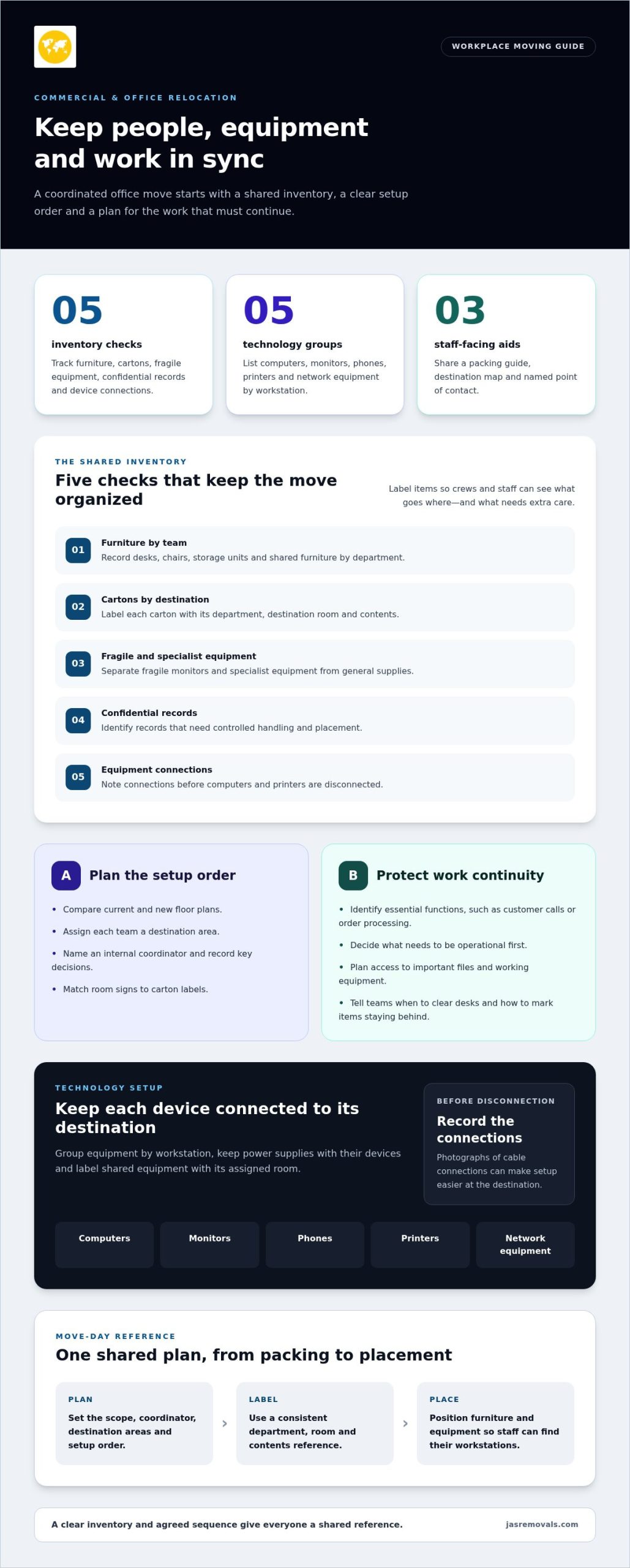
An office move involves more than changing addresses. Staff need access to files, furniture and working equipment at the new site. A small design studio, for example, might move desks, sample materials, computers and shared printers. Listing these items by department shows what travels together and which belongings need specialist handling or careful placement before work resumes.
Start with a move plan that names an internal coordinator and records key decisions. Compare the current and new floor plans, then assign each team a destination area. A customer support group may need desks and headsets ready before archived files arrive. A clear sequence helps staff understand what changes first, what remains available and where equipment will go.
Use a clear inventory to keep the work organized:
- Record desks, chairs, storage units and shared furniture by team.
- Label cartons with the department, destination room and contents.
- Separate fragile monitors and specialist equipment from general supplies.
- Identify confidential records for controlled handling and placement.
- Note equipment connections before computers and printers are disconnected.
Technology needs deliberate coordination. List computers, monitors, phones, printers and network equipment by workstation. Photographing cable connections can make setup easier at the destination. Keep power supplies with their devices and label shared equipment with its assigned room. A server cabinet or specialist machine needs a clear handling sequence because its position and connections affect how the wider office operates.
Plan around business tasks as well as the building. Identify essential functions, such as answering customer calls or processing orders, and decide what needs to be operational first. A finance team, for example, may need secure access to its files before routine storage is unpacked. A floor plan, labelled inventory and agreed setup order help crews place furniture efficiently and staff find their workstations.
Clear communication keeps each stage visible. Give employees a concise packing guide, a destination map and a named point of contact. Tell teams when to clear desks and how to mark items that must stay behind. At the new office, use room signs that match carton labels. These steps help prevent boxes from ending up in the wrong room or essential equipment from being misplaced.
For a move involving workstations, furniture and technical equipment, set out the scope and sequence before relocation day. A written plan can clarify what is packed, transported and positioned, while an inventory provides a shared reference. Explore office relocation planning as a next step for organizing a workplace move.
Customer reviews and ratings
A star rating gives a quick impression, not the whole picture. Read the comments behind it and look for details about arrival updates, handling and delivery. A reviewer might describe how a dining table arrived or explain how a delay was communicated. Those details reveal more than a score alone. Consider complaints in context, and pay closer attention when the same issue appears repeatedly.
Match reviews to the move you’re planning. A short local move may involve different arrangements from a long-distance relocation. Look for comments about a similar route, home type and service. If you have fragile artwork, a review about careful handling is more relevant than one focused only on punctuality. For an office move, look for examples involving equipment, furniture or staff coordination.
Use a consistent reading process to compare ratings:
- Read detailed reviews alongside the overall rating.
- Look for repeated comments about communication and care.
- Compare feedback about moves with similar distance and scope.
- Notice whether the reviewer explains the issue and its outcome.
- Check whether the comments describe packing, transport or delivery.
This approach separates useful evidence from general praise or frustration. “Great service” offers little detail. A comment describing clear arrival updates and careful handling of a fragile cabinet gives more practical insight. Patterns across several reviews can show where service is consistent, while a single experience may reflect circumstances specific to that move.
Pay attention to how a review describes a problem. A missed update, damaged item or changed schedule can be stressful. The response may show whether the concern was acknowledged and explained. Read the original comment and any public reply together. A calm, specific response gives more context than a brief statement that avoids the issue. One reply does not show how every situation will be handled.
Reviews can help you prepare focused questions before making a decision. If several reviewers mention unclear packing responsibilities, clarify the packing scope in writing. If comments describe access difficulties, note stairs, lifts, parking and narrow entrances. For a long-distance move, use reviews to identify practical topics such as delivery updates and how belongings are accounted for in transit.
Keep your own comparison notes. Record the review source, date, move type and details that matter to your household. A note such as “long route, clear updates” is more useful later than a remembered star score. Use customer feedback alongside a clear written scope, an item inventory and an explanation of how the move will be coordinated.
Packing and unpacking
A reliable packing sequence starts with sorting, not sealing boxes. Choose one room, such as the bathroom, and group similar belongings. Set aside items that won’t travel, then prepare a separate essentials bag. This keeps daily necessities accessible. As you fill each carton, record its contents and destination room. That simple record makes unpacking more orderly and helps you find priority boxes.
Choose containers that suit their contents. Books need sturdy cartons and balanced loads; linens can cushion suitable household items. Wrap glassware individually and pack it upright, with padding between pieces. Fill large gaps to prevent contents shifting. Label fragile cartons clearly, but don’t rely on labels alone. Tell the people carrying them which items need care, especially cartons containing lamps or crockery.
Work through each room with a repeatable routine:
- Sort belongings and clear items that won’t be moved.
- Protect delicate surfaces and separate small parts.
- Pack heavier items at the bottom of each carton.
- Fill empty spaces to limit movement during transport.
- Label each carton with its contents and destination room.
Prepare furniture before lifting. Empty drawers, secure doors and protect exposed corners. Keep screws, brackets and other fittings together, labelled by item. For example, put a bed’s fittings in a marked bag and keep it with the bed parts. Photographing a complex shelf before dismantling can help you reassemble it. Clear routes around doorways also make handling easier at both homes.
Some belongings need more than routine household packing. A piano has delicate components and a substantial frame; framed artwork can have vulnerable surfaces and glazing. List these items separately from ordinary furniture. Specialist piano and fine art export packing is designed for items needing dedicated transit preparation. Include each item’s destination and handling needs in the move plan.
Unpacking is easier when the first cartons contain immediate essentials. Mark bedding, basic kitchen supplies and children’s essentials for early access. At the destination, place cartons in their labelled rooms before opening them. Flatten empty cartons as you go and keep packaging out of walkways. Unpacking cookware in the kitchen first, for example, can make meal preparation easier while other rooms are still in progress.
Finish by checking the inventory against the delivered items. Open fragile cartons on a clear surface, inspect the contents and keep protective materials until delicate pieces are in place. Assemble furniture after confirming its parts are present. This final check gives you a record of what has arrived and what needs attention. A room-by-room plan also prevents unpacking from becoming one large, unsorted task.
Apartment and house moves
Apartments and houses can present different access needs. A third-floor flat, for example, may involve stairs, a lift, shared corridors and timed loading access. A detached home may have a longer path between the front door and vehicle. Record access details at both addresses, including door widths, parking arrangements, entry instructions and building rules affecting furniture or carton handling.
Begin with a room-by-room inventory, listing large items such as beds, wardrobes, sofas and appliances first. Add awkward pieces, including narrow hallway tables and large mirrors. The list helps you picture how belongings will leave each room and enter the next home. It also gives you a practical basis for deciding what to move, donate, store or prepare separately.
Plan apartment access early. Ask the building manager about lift use, loading areas and moving-day procedures. Note booking instructions and share them with everyone involved. Measure the lift and the largest furniture pieces, then compare the dimensions before moving day. If a sofa won’t fit in the lift, include the route through stairs and doorways in the plan.
For a house, map the route from each room to the exit. Clear rugs, shoes and loose items from hallways. Keep children’s belongings and pet supplies in a separate, accessible area. A labelled box with a kettle, cups and basic cleaning supplies can make the first evening easier. Identify delicate items separately, especially framed artwork or a piano requiring specialist packing.
Use a short checklist to prepare either property:
- Confirm access details for the old and new addresses.
- Measure doorways, stair turns and lift interiors against large furniture.
- Set aside keys, documents and daily essentials for personal use.
- Label boxes by destination room, such as kitchen or main bedroom.
- Keep pathways clear for safe carrying and placement.
The route between addresses also shapes planning. A move within Ireland is domestic; a move across a national border is international. Distance, access and the household inventory all affect the arrangements. For either route, keep address details, contact information and a clear inventory together. This gives you one reference point if questions arise during loading or delivery.
Choose the service scope to match the move. Domestic Moves address household relocations within the country, while International Moves support moves across borders. If you’re preparing an apartment or house move, plan your household relocation around the route, access conditions and belongings involved.
JAS Removals & Storage: International Moves
JAS Removals & Storage provides International Moves for households relocating across borders. For a move within Ireland, Domestic Moves may be suitable; for a workplace relocation, Office Moves address business moving needs. Secure Storage is also available when belongings need a place between stages of a relocation.
To prepare, gather your origin and destination addresses, a household inventory, and details about large or delicate items. This gives the moving plan a practical starting point and helps clarify the support needed for your route. For a household move abroad, or to discuss which moving service fits your plans, contact JAS Removals & Storage.
Set your move in motion with a clear plan
Turn the move into a concise brief. Note the origin and destination, whether you’re moving a household or workplace, and which belongings need particular care. Add access details and timing considerations. This gives the planning conversation a practical starting point, even if some decisions are still taking shape.
When comparing Movers On The Go, consider how each option fits your route and type of move. JAS Removals & Storage offers International Moves, Domestic Moves and Office Moves. Identify whether you’re crossing borders, moving within Ireland or relocating a workplace, then share the details that shape your requirements. List artwork or a piano separately from general household contents.
A short inventory and clear priorities can help you move from research to a workable plan. Contact JAS Removals & Storage to discuss your move and its requirements. With the essentials set out, you can take the next step with greater clarity.
Frequently Asked Questions
How much in advance should I start packing to move?
Start packing once your moving date is set, beginning with items you rarely use. Seasonal clothing, spare linens and hobby equipment can often be boxed before everyday kitchenware or work essentials. Keep one clearly marked box for immediate needs after arrival, such as chargers, a change of clothes and basic toiletries. This staged approach helps you make steady progress without packing away items you still rely on.
Should I Tip Moving Guys?
Tipping a moving crew is optional, not a requirement. If you choose to give a tip, base it on the service you experienced, such as careful handling of a difficult item or considerate coordination. You can also express appreciation with a direct thank-you. For a household or office move, decide what feels appropriate to you; a tip is not an expected charge.