

The hardest part of an office move isn’t the truck; it’s keeping people, equipment, and essential work aligned. Office relocation services bring planning, packing, transport, moving-day coordination, and specialized support into one organized process. The right sequence matters especially in law, medical, and other professional offices, where sensitive records, specialist equipment, or ongoing client work need careful attention.
It’s natural to focus on the move itself, but a smoother transition starts earlier: with a clear inventory, decisions about special handling, and a plan for the new space. This guide explains how to organize a local or long-distance business move and account for IT, valuable items, and work that needs to continue throughout the transition.
You’ll learn what relocation planning and packing can cover, how to coordinate moving day, which details shape the plan, and when specialized support can help. The goal is practical clarity, so you can prepare your team, protect essential assets, and manage the move in an orderly way.
Key Takeaways
- Start with an inventory, a move sequence, and clear responsibilities so teams know what happens before, during, and after the relocation.
- Plan packing around what each item needs, with particular care for sensitive records, IT equipment, and delicate or valuable assets.
- For local and long-distance moves, align transport, access, and destination readiness with the route and the work that must continue.
- Coordinate moving day through clear arrival, loading, and placement priorities to reduce confusion as people and equipment shift locations.
- Build a budget around the move’s scope, distance, packing needs, storage requirements, and specialized support rather than relying on a generic estimate.
Commercial relocation planning and coordination
A commercial move begins with decisions about people, equipment, access, and business continuity. A written plan connects these details to the move sequence and the layout of the new workspace.
Customized Move Proposals
A customized proposal should reflect the actual scope: workstations, shared equipment, records, specialty items, and the destination layout. For example, a law office may need labeled file groups and controlled handoffs, while a medical practice may need equipment assigned to specific rooms. Compare what each proposal includes, excludes, and assigns to your staff.
Use the proposal to set responsibilities, access arrangements, and priorities for commercial moving. Movers can customize the sequence around departments or building constraints, rather than treating every office as the same job. Years of experience can be useful context, but the written plan should show how the mover will handle your particular inventory and schedule.
Written Estimates and Quotes
A written estimate gives your team a shared basis for planning. It should describe the move scope, packing responsibilities, transport assumptions, access conditions, and any planned storage. Compare like with like: an estimate that excludes packing or furniture disassembly is not directly comparable to one that includes those tasks.
The cost of an office relocation depends on the volume and type of items, distance, packing needs, access at both sites, storage, and specialized handling. Changes to the inventory, building access, or move date can affect the scope. Review the assumptions and possible extra work before approving a quote, and record any agreed changes.
Planning the Office Move
Begin by naming a move lead and collecting department inventories. Map furniture and equipment to the destination, identify items needing special handling, and assign packing responsibilities. Then coordinate building access, elevator or loading arrangements, and the order for moving teams. Finish with a destination check so each department knows where its items belong.
Start planning as soon as the move date and destination become clear. The lead time depends on office size, distance, lease or building arrangements, and how much work must continue during the transition. A complex site or tightly coordinated schedule needs more preparation than a small move with straightforward access.
Choosing an Office Moving Company
To compare office moving companies, assess the written scope, planning process, handling approach, schedule, and clarity of responsibilities. Look for a proposal that addresses your actual inventory and destination, not just a broad description of commercial moving. Compare experience with relevant work, but weigh the practical detail of the plan alongside years of experience.
Licensing, insurance, and permit requirements depend on the route, vehicle, and building arrangements, and can differ by state and locality. Include loading access and building requirements in the plan, and make sure the written proposal explains coverage and responsibilities. Common risks include incomplete inventories, delayed access, and unclear packing duties, which can lead to extra handling, storage, or labor needs.
Packing and unpacking
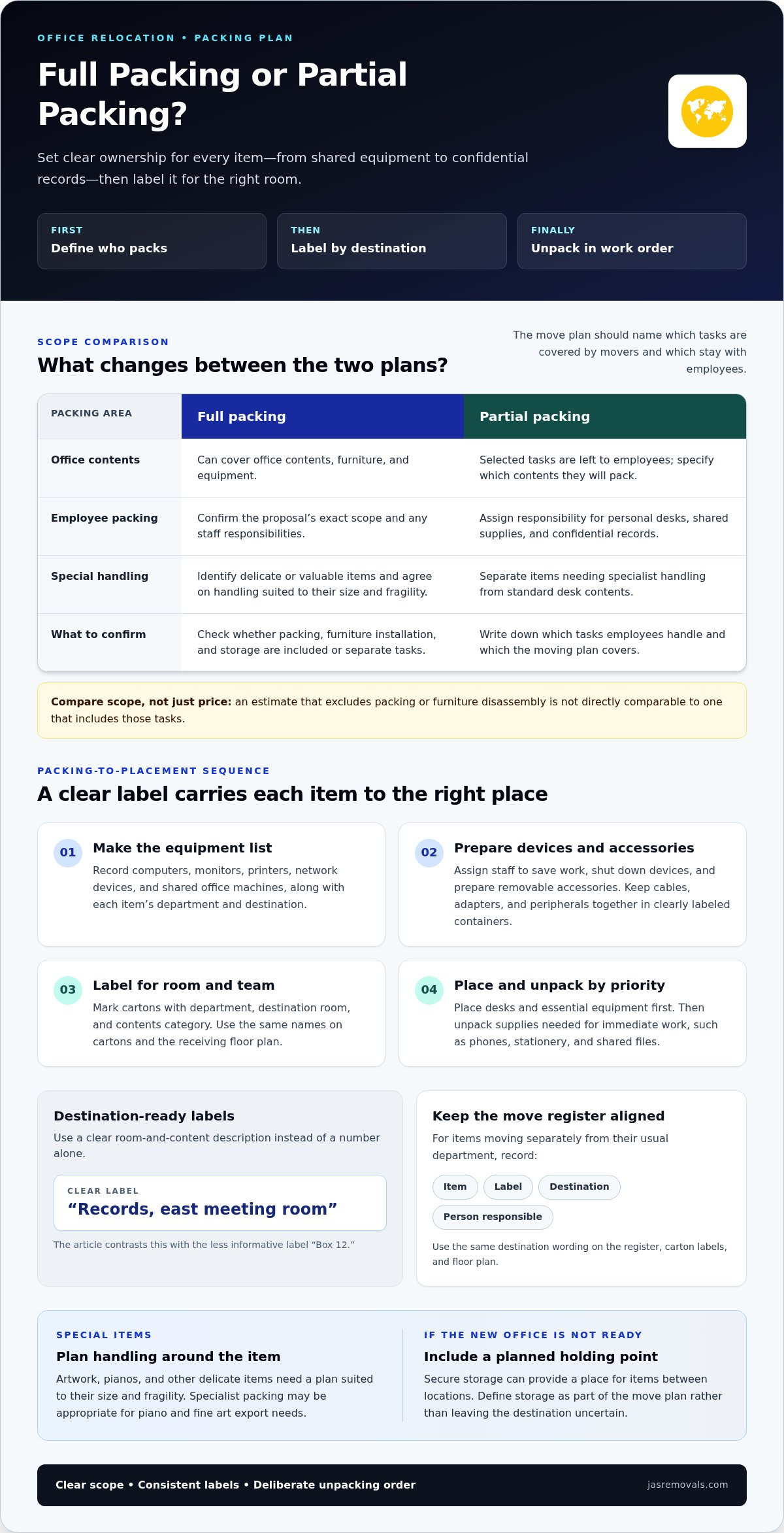
Packing plans should match each item to its destination, handling needs, and unpacking order. Office movers can include packing, furniture installation, and storage as separate tasks, so define which ones the move plan covers.
Equipment Packing and Protection
Start with an equipment list covering computers, monitors, printers, network devices, and shared office machines. Record each item’s department and destination, then separate equipment needing specialist handling from standard desk contents. For example, label a printer with its receiving room and keep its cables with it.
Before packing, assign staff to save work, shut down devices, and prepare removable accessories. Keep cables, adapters, and peripherals together in clearly labeled containers. Artwork, pianos, and other delicate items need a handling plan suited to their size and fragility. Piano and fine art export packing addresses these specialized packing needs.
Full Packing and Unpacking
Full packing can cover office contents, furniture, and equipment, while a partial plan leaves selected tasks to employees. Decide who packs personal desks, shared supplies, and confidential records. Mark each carton with its department, destination room, and contents category so movers can place it correctly without opening it.
Unpacking works best in a deliberate order. Place desks and essential equipment first, then unpack supplies needed for immediate work, such as phones, stationery, and shared files. Confirm each team’s room labels before opening cartons, and keep empty packing materials separate from items awaiting installation.
Furniture placement deserves its own layout. Mark desks, chairs, cabinets, and meeting tables on the receiving floor plan, then label each piece by room or team. This reduces unnecessary shifting after delivery and helps staff find their work areas. If the new office is not ready for every item, secure storage can provide a planned holding point between locations.
Keep a packing register for items that move separately from their usual department. A simple record can note the item, its label, its destination, and the person responsible for it. Use the same label names on cartons and the floor plan. For example, “Records, east meeting room” gives the receiving team clearer direction than “Box 12.”
Before departure, walk through each room and compare the remaining contents with the packing register. At the destination, unpack by operational priority: essential workstations, shared equipment, then less-used furniture and supplies. A final room-by-room review helps identify misplaced items while the moving sequence is still clear.
Local and long-distance office moves
Distance changes the move sequence, while office size shapes the resources and coordination required. A local move and an interstate relocation need different plans for routes, access, and downtime.
Moves for Different Office Sizes
A small office may move in coordinated department groups, while a larger site often needs an inventory organized by floor, team, or destination room. Count workstations, shared equipment, and storage areas before setting priorities. For example, a company moving one department first can prepare that team’s new workspace while other employees continue working.
For any office size, identify critical operations and items that should not be packed together. A reception desk, server room, or records area may need a distinct sequence. Include access at both departure and arrival in the move plan, then align the loading order with the destination layout. That makes the move practical, not just seamless on paper.
City and State Cost Variations
Local office moving costs and requirements vary with distance, access, parking, building policies, and the amount of handling involved. City and state rules can also affect where a vehicle may load or unload, so include both properties and the route in the written scope.
For a move within the same city, document building access, loading locations, and any time restrictions at both addresses. For a move across state lines, account for the longer route and destination arrangements in the schedule. Compare estimates using the same inventory and service scope; otherwise, different assumptions can make the figures misleading.
Long-distance and interstate moves need careful timing between pickup and delivery. Set a clear sequence for packing, departure, arrival, and essential equipment setup. If teams work remotely during transit, identify the records and devices employees need before the move begins. This helps manage downtime without assuming every item must travel together.
Local moves may cover a short distance but still involve elevators, loading docks, restricted access, or separate building procedures. Confirm who can open each site and where the moving team should stage items. A residential move follows a different plan because household contents and work equipment have different destinations and priorities. Keep business inventory distinct if an employee’s home is also part of the transition.
Separate the move into practical groups: essential operations, shared equipment, individual work areas, and items that can follow later. Assign each group a destination and a receiving contact. For example, a finance team may need its files and workstations placed before general office furniture. This order can support a smoother restart at the new site.
Before confirming the schedule, compare the route, access conditions, and delivery sequence with the office’s operating needs. Local and interstate moves both benefit from a defined inventory, but distance adds coordination between origin and destination. A clear plan gives employees and movers the same reference point for each stage.
Moving-day project management
Moving day runs more smoothly when each team knows its arrival point, task, and destination. A floor plan, labeled inventory, and named move lead give employees and movers a shared reference.
To minimize downtime, prioritize essential operations and move their equipment in a sequence that supports setup at the new office. Identify which teams need to resume work first, prepare their work areas, and keep critical supplies accessible during the transition.
Before loading begins, the move lead can review the schedule with building contacts and department representatives. Confirm access at both addresses, designate a point person for questions, and keep the latest inventory and destination map together. If a loading entrance changes, the lead can communicate the update before crews start moving items.
Use labels that connect each item to its destination, not just its former location. For example, mark a chair or monitor with its team and receiving room. Match carton labels to a floor plan, and keep a separate list for shared equipment. This reduces time spent working out where an item belongs after unloading.
- Set aside moving supplies, such as labels, tape, and protective materials, by packing area.
- Mark fragile or priority items clearly, and show their destination on the label.
- Keep essential documents and work materials grouped for quick access.
- Record items that need special handling and identify who receives them.
Some businesses consider labor-only moving services, where workers handle loading or unloading while the business arranges the other parts of the move. This means the company must coordinate transport, supplies, and timing itself. It may suit a limited task, such as moving furniture between rooms, but requires clear responsibility for each stage.
Specialty items need their own instructions. A large conference table, delicate artwork, or sensitive office equipment may require specific handling, protective materials, or a planned route through the building. Identify these items before moving day, explain access constraints, and assign a receiving contact who can confirm placement.
During loading, use the inventory to track what leaves each area. At arrival, direct movers to the marked rooms and check priority items against the list. A damaged carton or misplaced chair is easier to address while the crew and department representative are still at the destination.
Close the move with a walkthrough of both sites. Confirm that the agreed items have left the old office, then check the new workspace for misplaced furniture, equipment, or supplies. The move lead can record outstanding tasks and share them with the relevant team, making follow-up clear after the moving company departs.
How much do office moving services cost in the United States?
The price depends on the case and is provided after a quote request. An office move’s scope, distance, access conditions, packing needs, storage, and specialized handling shape the estimate. Moving a few work areas differs from relocating multiple departments, floors, or locations.
Start by defining what the estimate should cover. List the furniture, equipment, records, and supplies to be moved, then separate items your staff will pack. Note both addresses, building access details, and the planned move sequence. These details help make the estimate specific to the work rather than a broad allowance.
Cost factors commonly include:
- Inventory and volume: desks, filing cabinets, computers, and shared equipment affect the amount of handling and transport.
- Distance and route: travel between addresses and the move’s pickup and delivery arrangements shape the plan.
- Access: stairs, elevators, loading areas, and building restrictions can change how items move.
- Packing and unpacking: the estimate changes with the amount of packing, furniture preparation, and placement included.
- Special handling or storage: delicate items and items held between locations require specific planning.
Compare estimates by checking that each uses the same inventory and scope. For example, one quote may include packing and furniture preparation, while another may assume your employees handle those tasks. Compare loading, transport, unloading, and any storage as separate parts of the written estimate. This makes differences easier to understand before approving a plan.
Building access can affect the work even when addresses are nearby. An office with a restricted loading area may need a different sequence from a suite with direct ground-level access. Share building instructions and receiving hours early, as missing details can require changes to the move plan.
Ask how changes are handled if the inventory grows, a destination room changes, or packing responsibilities shift. Keep revisions in writing and tie them to specific items or tasks. For instance, adding several filing cabinets after the inventory may affect the loading plan and handling time.
For a useful comparison, review the estimate alongside your operational priorities. Decide which teams need equipment first, what staff will pack, and whether any items need temporary storage. Then compare how each written scope addresses those needs, not just its headline total.
Prepare an itemized scope for an office move quote, including both locations, access details, packing needs, and any storage requirements. A clear request gives the estimate a practical basis and helps align the proposed work with your move plan.
JAS Removals & Storage: International Moves
JAS Removals & Storage provides Office Moves for businesses planning a local or long-distance relocation. Its International Moves and Domestic Moves support relocations across borders or within a country, while Secure Storage can help when belongings need to be held between locations.
Turn to JAS when you’re ready to plan the move scope, coordinate the transition, or include storage in your relocation arrangements. Share your destinations, moving priorities, and the items involved to begin a practical conversation about the next steps.
Contact JAS Removals & Storage to discuss your office move.
Set Your Next Move in Motion
A business move is also an opportunity to decide how the new workplace should support your team. Before setting dates, identify the operational priorities that will guide decisions, such as which departments need to resume work first and which assets require particular care. Clear priorities make planning conversations more useful and keep the transition focused on your business, not just transporting its contents.
When you’re ready to take that step, JAS Removals & Storage offers Office Moves, Domestic Moves, and International Moves. Discussing your destination, move scope, and priorities can help shape office relocation services around the transition ahead.
Contact JAS Removals & Storage to begin planning. A considered next step can make the path to your new workspace feel more manageable.
Frequently Asked Questions
What services do office relocation companies provide?
Office relocation companies can coordinate the transfer of workplace furniture, equipment, and documents. Depending on the move, office relocation services may also include packing, storage, or technical support to disconnect and reconnect IT. For example, a business moving its workstations may need both physical transport and help preparing its network equipment. JAS Removals & Storage offers Commercial Moves and IT Re/De Commission for workstations, servers, and IT infrastructure.
What should businesses do to protect IT equipment and sensitive documents during a move?
Assign an internal owner to track devices and records from departure through delivery. For office relocation services, keep access credentials under staff control and separate from equipment cartons. Group documents by department, limit handling to designated staff, and use a transfer log to record custody and receipt. Before packing, confirm important digital files are backed up and identify which devices employees need first at the new office.
How far in advance should a business plan an office move?
Start planning as soon as the move date and destination become clear. The lead time depends on office size, distance, building arrangements, and how much work must continue during the transition.