
What if the key to a calmer international move isn’t doing everything at once, but knowing what needs attention next? An international moving checklist turns unfamiliar tasks into a sequence you can follow, helping you keep deadlines, documents and household plans in view.
It’s understandable to worry about missing a time-sensitive document or finding that your belongings won’t arrive when you do. Moving abroad can involve different administrative steps from those you’re used to, and shipment planning needs to fit around your departure and arrival dates.
This stage-by-stage guide explains what to organize early, how to prepare important paperwork, and how to make decisions about household goods, packing and transport as your move gets closer. It also covers departure tasks and the first steps after arrival, so you can track key dates and keep essential documents with you. If your move-out and move-in dates don’t align, storage can help bridge the gap. Coordinated international moving support can connect household preparation with overseas transport logistics, including specialist packing for delicate or high-value belongings.
Key Takeaways
- Use an international moving checklist to assign tasks to the right stage and keep important dates visible.
- Make an inventory of documents and keep essential travel and identity records accessible during transit.
- Sort belongings into clear categories before finalizing shipment plans, and flag items that need specialist handling.
- Coordinate home, account and travel arrangements around your departure and shipment dates.
- After arrival, compare delivered belongings with your inventory and record any issues promptly.
International Moving Checklist: Start with Dates, Priorities, and Responsibilities
An international move has many moving parts, but you don’t need to solve them all today. Divide the work into stages, then give each task an owner and a target date. This turns your international moving checklist into a working plan: you can see what needs attention now, what depends on another decision, and what’s already complete.
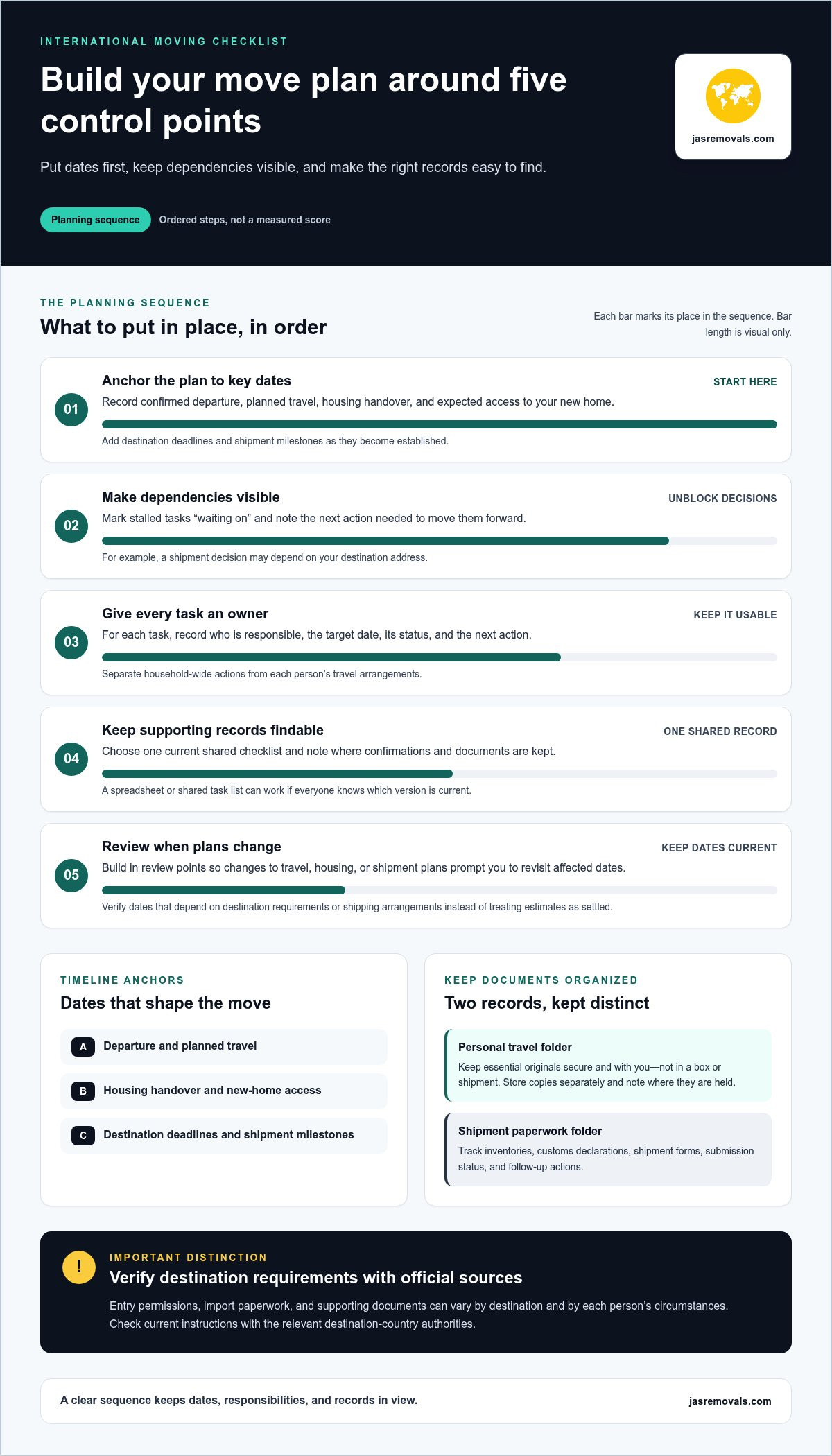
Begin with the dates that shape the move: your confirmed departure, planned travel, housing handover and expected access to your new home. Add destination deadlines and shipment milestones as you establish them. If a date depends on destination requirements or shipping arrangements, mark it for verification rather than treating an estimate as settled.
Deadline-led planning reduces last-minute pressure by giving each decision a clear place in the sequence.
Set up a move timeline that works backwards
Work backwards from fixed dates. If you know when you’ll leave your current home, list the tasks that must happen before then, such as preparing belongings for shipment and completing household arrangements. Add the earlier steps those tasks depend on. Build in review points so a change to travel, housing or shipment plans prompts you to revisit affected dates instead of relying on an outdated timeline.
Keep dependencies visible. A shipment decision, for example, may depend on your destination address, while a home handover task may depend on your travel date. Label tasks “waiting on” when they can’t move forward yet, and note the next action needed to unblock them. This keeps open decisions from disappearing among completed tasks.
Make the checklist usable for everyone involved
One shared record helps household members stay aligned. Separate household-wide actions from individual responsibilities, such as personal travel arrangements for each adult or child. For every task, record an owner, target date, status and the location of its supporting document or confirmation. A spreadsheet or shared task list can work, provided everyone knows which version is current.
- Timeline: departure, housing, travel and shipment milestones.
- Task owner: the person responsible and the next action.
- Records: where confirmations and important documents are kept.
- Dependencies: decisions or dates that could affect other tasks.
Keep a short priority list for decisions that could change later arrangements, such as what will travel with you and what will be shipped. Review it regularly with your household. For coordinated overseas transport, JAS Removals & Storage connects household preparation with shipping and transport planning. When move-out and move-in dates don’t align, secure storage can help bridge the gap.
Documents for an International Move: Prepare Travel and Household Records
Documents can be easy to overlook while travel plans and household arrangements are taking shape. Add them to your international moving checklist early, and keep an inventory showing what each record is for, who needs it, where the original is stored and whether a copy is available. This gives everyone a clear reference without mixing essential travel papers into the household shipment.
Organize your records in advance, but rely on destination-country authorities for the requirements that apply to your move. Entry permissions, import paperwork and supporting documents can vary by destination and by each person’s circumstances, so verify current instructions through the relevant official sources.
Gather personal, travel, and health records
Make a separate entry for each household member. Include passports, identity records, visas or other travel permissions, and family documents such as birth or marriage certificates when relevant. Add medical records, current prescriptions and insurance details that may support continuity of care after arrival. Check each person’s document validity and travel requirements against official destination guidance, rather than assuming one adult’s requirements cover the whole household.
- Travel and identity: passports, identification, permissions and supporting family records.
- Health: relevant medical history, prescriptions and insurance information.
- Household and employment: records that may be needed for residency or other local administration.
Keep originals together in a secure travel folder that stays with you, not in a box or shipment. Store copies separately, such as in a protected digital location or with a trusted person, and note exactly where each copy is held. Protect sensitive information with access controls, and avoid sharing personal records more widely than necessary.
Keep shipment paperwork and records organized
Set up a dedicated folder for moving correspondence, household inventories, customs declarations and shipment-related forms. Track each item’s status, submission date and any follow-up action. A clear record helps you distinguish paperwork for personal travel from documents connected to the goods being transported.
Use the same names and descriptions across your inventory and supporting records, and retain copies of completed forms and confirmations. Requirements and submission steps can differ by country, so use current destination-authority guidance to identify what applies and when it’s due. If instructions change, update the folder and note the revision date so household members aren’t working from an older version.
Keep your document folder accessible while travelling, but separate from shipment paperwork kept with your moving records. For help connecting household preparation with overseas transport planning, international move coordination brings those logistics into one organized process.
Before International Shipping: Inventory Belongings and Coordinate the Move
Before arranging overseas transport, get a clear picture of what you own and where each item is intended to go. A room-by-room inventory connects household decisions with shipment planning and makes it easier to identify belongings that need special handling or separate arrangements. Add the inventory to your international moving checklist and update it as plans change.
Sort belongings into five working groups: ship, store, sell, donate or carry personally. These are planning categories, not final commitments. An item’s destination may depend on your housing dates, shipment arrangements or destination-country restrictions. Check official sources for rules affecting household goods and regulated items before deciding what to send.
Build a useful household inventory
Work room by room and use clear descriptions to distinguish similar belongings. Record ownership, approximate quantities and condition where useful. For example, “two framed paintings in the living room” is more useful than “art.” Flag pianos, fine art, fragile possessions and other high-value items for specialist handling. JAS Removals & Storage provides specialist export packing and crating for pianos and fine art.
- Item details: description, room, owner and approximate quantity.
- Condition and handling: note existing condition and flag delicate or high-value belongings.
- Planned destination: mark each item to ship, store, sell, donate or carry.
Keep the inventory current. If an item is sold, added or redirected to storage, update its status so your household records and shipment decisions remain aligned. Use separate international packing advice for packing techniques, rather than trying to turn the inventory into a packing guide.
Align shipment decisions with move dates
Map expected shipment milestones against travel and housing dates. Record the planned handoff, estimated transit period and expected delivery window when those details are available, then note what each milestone depends on. For instance, delivery arrangements may rely on having access to your new home. Treat estimates as planning references and revise them if your dates or arrangements change.
A timing gap is possible: you may leave your current home before your destination residence is ready to receive your belongings. Decide which items you’ll need immediately on arrival and which can wait, then account for that distinction in your shipment plan. Secure storage can bridge a gap between move-out and move-in dates, whether belongings need short-term transit holding or longer-term storage.
Keep decisions visible to everyone involved. A short note beside each inventory category can show whether it’s ready, waiting on a date or needs further attention. Coordinated international moving support connects household preparation with overseas shipping and transport management, helping keep belongings, milestones and arrival arrangements in view. For a clearer picture of the factors that shape your international moving cost, compare shipment details and the services included in each estimate.
Final Weeks Before Moving Abroad: Close Out Home and Travel Tasks
The final weeks are for closing loops, not rebuilding the plan. Review your international moving checklist and sort remaining tasks by what they depend on: your housing handover, travel arrangements, shipment milestones or another person’s action. If a date has shifted, revisit any task tied to it. Mark each open item with an owner, the next action and a target date so nothing is left as a vague reminder.
Complete household and address administration
List the institutions and service providers that need your new address or instructions to close, transfer or adjust an account. Follow each organization’s process and schedule actions around your final occupancy date. For example, note when a request was submitted, any reference or confirmation received, and whether follow-up is still needed. Keep this record together so you can resolve outstanding items without searching through old messages.
Include routine household arrangements as well as financial and personal accounts. Identify what must remain active until handover and what can be changed earlier. Don’t assume a request is complete simply because it has been sent; record its status and any expected next step.
Prepare for travel and the handover
Set aside a travel-day bag before household goods are collected or packed. Keep travel documents, essential medicines and immediate necessities accessible throughout the journey, not among shipped belongings. Make sure household members know which bag or folder holds shared essentials, and keep sensitive documents secure.
Write down the practical details for both ends of the move: current and destination addresses, key contacts, property access arrangements, and who is responsible for keys or the final handover. Record last household responsibilities, such as when to leave the property or where to leave keys. A concise note prevents important details from being buried in a long email thread.
Before departure, compare your travel plan with the latest shipment arrangements. Check whether the handoff timing, contact details, destination access and expected delivery arrangements still fit together. If your arrival date or housing access has changed, note the effect on shipment and delivery plans, then record who will follow up.
- Still open: give every unresolved task an owner and next action.
- Date-dependent: identify what needs revisiting if housing, travel or shipment dates change.
- Ready for departure: keep travel essentials, contacts and handover details accessible.
For a final readiness review, scan the list from top to bottom. Confirm that completed actions have a record and unfinished ones have a clear next step. Overseas transport arrangements can be coordinated with your household’s departure plans through JAS Removals & Storage’s international moving service.
After Arrival: Track Delivery, Settle In, and Get Moving Support
Arrival is a milestone, not the end of the move. Your household goods may follow a different schedule from your travel, so keep delivery arrangements, shipment updates and local access details together in the shared international moving checklist. Note who is responsible for receiving the goods, how they can be reached and what to do if home access or delivery arrangements change.
Coordinate the first days at your destination
Before delivery, make sure the destination address and access arrangements are clear to everyone involved. Record details such as building entry instructions, access limitations and the local contact who will meet the delivery team. Keep these notes with the latest shipment information, rather than relying on messages scattered across email or chat.
Set aside essential items for the first days so you can manage while waiting for the rest of your household goods. Once belongings arrive, compare them with your inventory and note any missing or damaged items promptly, including the relevant item description and condition. Record the date, what you observed and any follow-up action taken. A clear, timely record helps keep delivery follow-up organized.
- Before delivery: review the address, access details and receiving contact.
- At delivery: check belongings against the inventory and record any issue.
- Afterward: add progress and outstanding actions to the shared checklist.
Settling in takes time beyond receiving the shipment. Prioritize the household essentials you need first, then work through remaining deliveries and setup tasks in a manageable order. Keep dates and next steps visible, especially if some belongings are arriving later or are being held separately.
Use coordinated support for complex move logistics
An overseas relocation involves linked stages, from preparing household goods to coordinating transport and delivery. JAS Removals & Storage coordinates international residential moves, including overseas shipping and tailored packing and transport management. This connects preparation at home with the wider logistics of moving belongings across borders. Secure storage can also provide a practical holding option if shipment timing and access to your new home don’t align.
As you settle in, keep shipment updates, delivery details and inventory notes in one place so decisions remain clear and follow-up doesn’t get lost among new-arrival tasks. International moving support from JAS Removals & Storage can help coordinate the logistics of your overseas relocation.
Take the Next Step Toward a Steadier Move
Your plan doesn’t have to be perfect to be useful. Treat your international moving checklist as a living guide: update it when dates shift, decisions are made or new priorities emerge. Each time you review it, choose one clear next action. Small, timely steps help turn a complex transition into a move you can approach with greater confidence.
JAS Removals & Storage provides international relocation support, from overseas shipping and transport coordination to specialist packing and secure storage. Discuss your international move with JAS Removals & Storage and take the next step with a coordinated plan.
With a clear plan and the right support alongside you, a new beginning can feel closer and more within reach.
Frequently Asked Questions
Can I bring my pet when I move internationally?
You may be able to bring your pet, but requirements vary by destination and animal. Check current official import, health and travel rules well ahead of your planned journey, including rules that apply to your pet’s species or circumstances. Pet travel arrangements are separate from shipping household goods. Add relevant requirements, responsible contacts and key dates to your move plan so you can track them alongside, but not confuse them with, shipment tasks.
Can I ship my car as part of an international move?
A vehicle may be shipped internationally, but whether it can be imported depends on the destination’s current rules and the specific vehicle. Eligibility, taxes and required documentation vary, so consult official destination guidance before making arrangements. Treat the car as a separate planning decision from household-goods transport. Consider whether it suits your new circumstances, then keep vehicle-related decisions, records and follow-up dates distinct in your international moving checklist.
How should I manage prescription medication when moving abroad?
Plan for continuity of care before you travel. Keep prescriptions and relevant medical records accessible, and discuss ongoing treatment with your healthcare professional so you can plan around the move. Check current destination rules for each medication with official authorities and healthcare professionals, since requirements can differ between medicines and countries. Don’t assume medication is treated like ordinary household goods or that a prescription from home settles its status abroad.
What happens if my household shipment arrives after I do?
A shipment may arrive on a different schedule from your travel, so prepare for a possible gap rather than relying on a specific arrival date. Keep the items you’ll need immediately with you, and note the delivery contact, local access arrangements and where you can stay or obtain essentials temporarily. Track shipment milestones and update your plans if home access changes. This helps you manage the first days while delivery details are being coordinated.
Should I move everything when relocating to another country?
No, the right amount to move depends on your needs, destination rules, housing and shipment arrangements. Create an inventory and consider each item’s role in your new home. Sort belongings into practical categories: ship, store, sell, donate or carry personally. Before including a specific item, check current official destination sources for relevant restrictions. This helps you make considered choices instead of assuming every household belonging can travel with you.
Can I use secure storage if my new home is not ready?
Yes, storage can help bridge a gap between leaving your current home and gaining access to your new one. Plan what needs to be held and for how long as part of your transition arrangements, then keep those details connected to your shipment plan. JAS Removals & Storage offers secure storage for short-term transit holding and longer-term needs, helping keep belongings in the plan while home access catches up.
Is an international moving checklist suitable for a business relocation?
The broad planning principles can help, including setting deadlines, organizing records, coordinating shipments and planning arrival. A business move also needs workplace-specific preparation, such as accounting for equipment, staff needs and technology arrangements. This checklist focuses on residential international moves. JAS Removals & Storage also provides office moves and IT Re/De Commission services, which support the distinct coordination needs of a workplace relocation.