

Packing earlier isn’t always better. A practical way to understand how to prepare for a house move is to start sorting about eight weeks ahead, tackling one to two rooms per weekend, then pack non-essentials around four to eight weeks before moving. This gives you a head start without leaving everyday belongings boxed for too long.
It’s natural to want everything ready well in advance, especially when a move involves a full home and a long list of details. But preparation isn’t only about packing. It’s also about keeping daily essentials within reach and making sure your new home is ready for the first night.
This checklist explains when to start, what to pack first, and how to keep clothes, medication, and other essentials accessible. You’ll also learn how to check belongings on moving day, plan furniture for the new rooms, and schedule utilities, cleaning, and other move-in preparations so every step has a place in the plan.
Key Takeaways
- Pack seasonal clothing and other rarely used belongings first, while keeping a small set of everyday items and a personal essentials bag within reach.
- Label boxes by room and contents so they’re easier to place and unpack, and choose professional movers when the move’s distance, scale, or handling needs call for added support.
- Measure rooms, doorways, hallways, and stairwells before deciding where furniture will go.
- On moving day, check belongings and walk through both homes before items are unloaded or you leave.
- Schedule utilities, cleaning, and essential home preparations ahead of move-in so the space is ready for the first night.
Packing most clothing while leaving essentials accessible
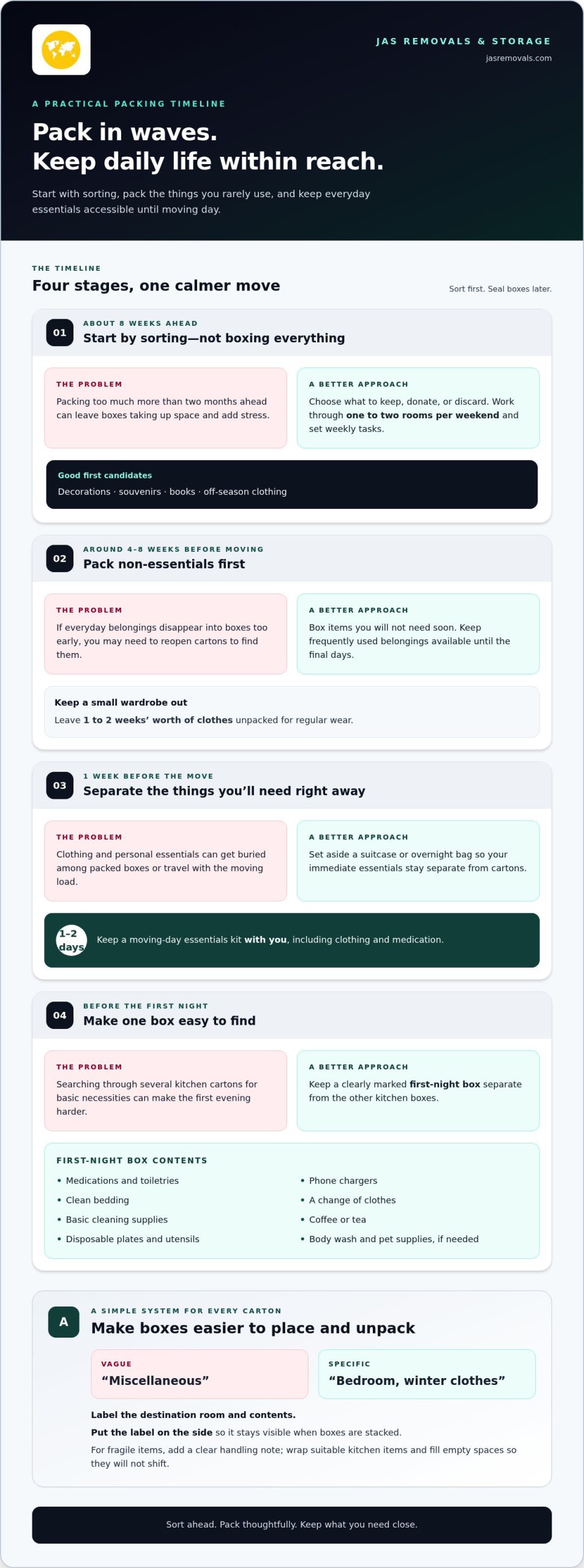
A house-moving checklist and timeline is a written sequence of packing and move-in tasks, each assigned a point before moving day. Start by sorting belongings about eight weeks ahead, pack non-essentials around 4-8 weeks before the move, and keep daily-use items available until the final days.
Work through one to two rooms per weekend, beginning with decorations, souvenirs, books, and off-season clothing. Packing more than two months before a move can create stress because boxes need storage, so start by sorting rather than sealing everything away. Leave 1 to 2 weeks’ worth of clothes unpacked for regular wear.
Before packing each room, decide what to keep, donate, or discard. Group similar belongings, place them in moving boxes, and label each box with its destination room and contents. Use a marker for clear labels, packing tape to secure boxes, and packing peanuts to cushion suitable items.
- Pack decorations and seasonal items first. These are less likely to be needed before moving day, so boxing them early reduces last-minute work.
- Keep labels specific. Mark a box “bedroom, winter clothes” rather than “miscellaneous” to make locating items easier.
- Set aside a suitcase or overnight bag 1 week before the move. It keeps clothing and personal essentials separate from packed boxes.
- Keep the moving-day essentials kit with you. A kit with clothing and medication for 1-2 days stays accessible instead of travelling in the moving load.
Pack a first-night box for the new home and keep it separate from the other kitchen boxes. Include medications, toiletries, phone chargers, clean bedding, a change of clothes, and basic cleaning supplies. Add coffee or tea, disposable plates and utensils, body wash, and pet supplies if needed. Keeping these items together means you can manage the first evening without opening multiple boxes.
For fragile kitchen items, wrap each piece in bubble wrap and fill empty spaces so items won’t shift. Clearly identify valuable belongings and keep them separate from everyday cartons. Large items need careful handling and a clear path through the home. Detach removable parts where practical and keep their hardware together. For pianos and fine art, JAS Removals & Storage provides specialist export packing to help protect delicate, high-value pieces during transit.
When is it too early to start packing?
Starting to sort about eight weeks before moving day gives you time to make decisions without filling your home with boxes too soon. Packing more than two months ahead can add stress because packed belongings need somewhere to stay. Begin with a checklist, not a stack of sealed cartons: choose a room, identify what can go, and set weekly tasks.
Try sorting one to two rooms per weekend, adjusting the schedule around work, family routines, and your moving date. Pack items you won’t need soon, but keep frequently used belongings available. This pace spreads the work across several weekends and helps you spot tasks that need extra planning, such as moving a piano or coordinating a large household.
Decide between a DIY move and hiring professional movers by considering the distance, volume of belongings, access at each home, and how much lifting you can manage. A truck rental may suit a move you can load and drive yourself; professional movers can handle more of the transport and lifting. A moving container is another option, with timing shaped by delivery, loading, and collection arrangements. There isn’t one universally cheapest choice: compare the full costs and effort, including vehicle rental, fuel, packing materials, labor, and time away from other responsibilities.
Write the destination room and contents on each box. For example, label a carton “kitchen, mugs” rather than “miscellaneous.” Put the label on the side so it remains visible when boxes are stacked. If a box needs careful handling, add a clear note describing the contents and handling instructions. A short room list can also help movers understand where each group belongs.
Prepare simple directions for each room before moving day. Mark where boxes should go, identify items that should stay together, and note furniture that needs careful placement. Keep instructions specific: “Place the desk against the window wall” is more useful than “office furniture.” Make sure someone familiar with the home is available when movers arrive to answer questions and guide placement.
Confirm the move details with your movers a few days before moving day. Review the date, arrival arrangements, addresses, and any access instructions for both homes. If you’re planning an interstate move in the United States, the moving company should have a U.S. Department of Transportation number. For delicate, high-value items, professional piano and fine art packing can help prepare them for transit.
Measuring rooms and planning furniture layouts
Measure each room, doorway, hallway, and stairwell before deciding where furniture will go. Record the width and height of tight entry points, then compare them with larger pieces such as sofas, beds, and wardrobes. A simple sketch with measurements helps you spot access problems before moving day.
Plan furniture placement around how each room will be used. Mark the bed, desk, and main walking paths on your sketch, leaving enough space to open doors and drawers. Measure the bathroom doorway before moving in a cabinet or shelving unit, and note which appliances need a clear route to the kitchen. Label each item with its destination room so the unloading plan matches your layout.
City, state, and building rules may affect parking, elevator reservations, or permitted moving times. If you live in a high-rise, ask building management about elevator bookings, moving-date restrictions, and where a moving van can park. Check local requirements for curb access or parking permits before scheduling the move, since rules can differ by location.
Use your moving timeline to coordinate address changes and utility transfers. Submit a change-of-address request to the United States Postal Service, which forwards mail for free for one year. Notify service providers and utility companies at least four to six weeks before the move, then contact utility providers at least two weeks before moving in. Schedule essential utilities to be active before move-in day.
Make storage decisions alongside your room plan. If furniture won’t fit the new layout or your move-in dates don’t align, separate those items from the belongings going directly to the home. Keep an inventory of stored pieces, including their intended room, so you can retrieve them when needed. JAS Removals & Storage offers secure storage for household goods and furniture during a transition.
Include pets and houseplants in your moving plan. Choose a quiet, closed room for a pet while movers carry furniture through open doors, and keep food, water, and familiar supplies nearby. Group plants together so they’re easy to load last and unload promptly. Mark their location on the room plan, away from heavy items and the main path.
- Before packing furniture: Measure each piece and its route through the home, including turns in hallways and stairwells.
- Before booking move-in access: Confirm building rules, elevator arrangements, parking, and any required permits.
- Before departure: Update your address, arrange utility activation, and assign a place for pets, plants, and stored items.
Inspecting the home and checking belongings on moving day
Before anything is unloaded, inspect the new home and note existing damage, water leaks, or areas needing attention. Test the heating and cooling systems, check under sinks and in the basement for plumbing leaks, and look for signs of pests or mold. Test smoke and carbon monoxide detectors before bringing belongings inside. A quick record of the home’s condition helps distinguish existing issues from damage noticed after the move.
At the old home, stay available while movers work so you can answer questions and check rooms as they’re cleared. Compare belongings with your inventory, paying particular attention to valuable items and boxes marked for careful handling. Before leaving, check every room, close the windows, turn off the lights, and lock the doors. Return keys according to your arrangements with the landlord or the person taking possession.
For a rental, give your landlord the required notice before moving out. Renters are generally advised to give 30 to 90 days’ notice, but the required period can depend on state law and the rental agreement. Read your lease, confirm the move-out date, and schedule a final walkthrough with enough time to address cleaning or repairs. Keep the agreement about key return clear.
Compare three estimates before choosing a moving company. Review what each estimate covers, including packing supplies, storage fees, and access arrangements, so you’re comparing similar services. Common risks include unclear charges or assumptions about what the estimate includes. Ask for itemized details in writing and keep a copy with your moving checklist. Consider how distance, household size, and access affect the work rather than comparing totals alone.
Prepare cleaning supplies, basic tools, and a small amount of food before moving day. Pack water, snacks, and a simple meal that doesn’t require kitchen appliances, then keep them separate from the moving load. If children or pets need supervision, arrange care to keep them away from open doors and busy pathways. Keep your phone, keys, essential documents, and internet service details accessible while coordinating the move.
- Before unloading: Photograph existing marks and test essential systems in the new home.
- Before leaving: Check rooms, windows, lights, and locks, then return keys as arranged.
- Before hiring: Compare three estimates and clarify included work, supplies, and storage.
After the last box leaves, take time to check cupboards, closets, and storage areas once more. At the new home, keep the inventory nearby and mark items as they arrive. This final room-by-room check helps you identify belongings that need attention before the move is complete.
Scheduling move-in preparations
A useful way to think about how to prepare for a house move is to treat move-in readiness as a scheduled project. Start organizing eight weeks before moving day with one calendar for bookings, utilities, and home preparations. Add the move date first, then work backward to assign each task a deadline and an owner. Record when the current home must be cleaned, when utilities should start, and when the new home will be ready for furniture.
Begin looking for movers about two months before the move. If you’re hiring during peak season, get multiple quotes early and compare the services and timing included. Once you choose a moving date, confirm access details with the new building, including elevator reservations, moving hours, and van parking. High-rise buildings may have specific rules, so add each booking or restriction to your calendar.
Put utility arrangements on the same schedule. Notify service providers and utility companies at least four to six weeks before the move, then contact utility providers at least two weeks before movers arrive. Arrange for essential utilities to be active before move-in day. Record the start and stop dates for electricity, water, gas, and internet, and keep confirmation details together.
Homeowners should begin preparing the new home two to three weeks before moving in. This leaves time to organize cleaning, repairs, and service setup before boxes and furniture fill the rooms. Set aside a day or two before moving in for a deep clean, including cabinets, drawers, drains, and appliance interiors. Schedule repairs before cleaning where possible, so dust or debris doesn’t undo the finished work.
- Three weeks before moving day: Arrange childcare or pet care, so children and animals have a safe routine while doors remain open.
- Before booking a high-rise move: Confirm elevator reservations, permitted moving times, and van parking with building management.
- Before move-in day: Schedule essential utilities and prepare the home for cleaning or repairs.
For a clear plan of how to prepare for a house move, keep the calendar current when dates change. If keys become available later than expected, move cleaning and utility appointments to match the new access date. Before packing the final household items, review each task with the person responsible and confirm appointments directly. For support coordinating a household relocation, plan your domestic move with a team that handles residential moves.
JAS Removals & Storage: International Moves
JAS Removals & Storage helps households coordinate International Moves, from packing plans to move-in timing. For a move within the country, Domestic Moves provide support with the transition. Secure Storage can help when your move-out and move-in dates don’t align, keeping belongings stored while you prepare the new home. If your relocation involves an office as well as a household, Office Moves are also available.
Turn to JAS Removals & Storage when you’re ready to plan the transport, storage, or coordination involved in your move. Share your destination, timing, and household needs to plan the next steps around your move.
Contact JAS Removals & Storage or visit jasremovals.com to discuss your move.
Make Your Next Move a Clear One
Turn your plans into a shared schedule. Decide which details need your attention, which can be handled by others, and when each decision must be made. A clear division helps everyone involved understand their role and keeps important arrangements from competing for your attention.
Knowing how to prepare for a house move also means recognizing when professional support can make the transition easier to coordinate. JAS Removals & Storage handles International Moves, Domestic Moves, and Office Moves, giving households and organizations options for different relocation needs. Discuss your plans with the team to decide what support will help you move forward with clarity.
When you’re ready to plan the next step, contact JAS Removals & Storage. You can move forward with a considered plan, one decision at a time.
Frequently Asked Questions
How Should You Prepare For A Home For A Move?
Prepare by turning the move into a sequence of decisions, not one large task. Start with a written inventory, noting what will be transported, stored, donated, or discarded. Then assign responsibilities, such as who handles paperwork, children, pets, and keys. For international relocations, allow time to coordinate shipping and logistics. A clear inventory also helps you explain special handling needs, such as a piano or framed artwork.
Why Clean Before the Furniture Arrives?
Cleaning before furniture arrives gives you access to floors, corners, and surfaces that become harder to reach once rooms are furnished. Wipe shelves before stacking kitchen items, and clean the floor beneath where a bed or sofa will sit. If the home needs repairs, complete dusty work before the final clean. Keep a small set of cleaning supplies accessible for marks or debris noticed during unloading.
How far in advance should you start preparing for a move?
Begin planning about eight weeks before moving day, then schedule tasks against the date. Starting to look for movers about two months ahead leaves time to compare arrangements and choose a suitable moving date. Use a calendar to set separate deadlines for sorting, bookings, utility changes, and access arrangements. If your move date changes, update dependent appointments, such as cleaning and utility activation, rather than relying on the old schedule.
How do you compare moving companies and check their licenses and insurance?
Compare three written estimates and check that each describes the same belongings, services, access conditions, and timing. For an interstate move in the United States, the moving company should have a U.S. Department of Transportation number. Review the written information about coverage, limits, and exclusions so you understand how belongings are handled if damage occurs. Keep estimates and the final agreement together for reference during the move.
What packing supplies do you need, and how much do they cost?
Basic supplies include moving boxes, packing tape, markers, and packing peanuts for cushioning suitable items. Bubble wrap can protect fragile kitchen pieces, while sturdy cartons help keep grouped belongings together. The total cost depends on how many boxes you need, their sizes, how many fragile items require protection, and whether you can reuse suitable materials. Make a room-by-room list first to avoid buying supplies that don’t suit your packing needs.
What should you do on moving day and during the final walkthrough?
Keep your phone, keys, medications, and essential documents with you, and have someone available to answer questions as belongings are loaded. At the new home, inspect rooms before unloading and note existing marks or problems. At the old home, check closets, cabinets, and storage spaces one last time. Close windows, turn off lights, lock the doors, and return keys according to your move-out arrangements.
Is it cheaper to hire movers, rent a moving truck, or use a moving container?
There isn’t one universally cheapest option. Compare the full costs and effort, including vehicle rental, fuel, packing materials, labor, and time away from other responsibilities.